


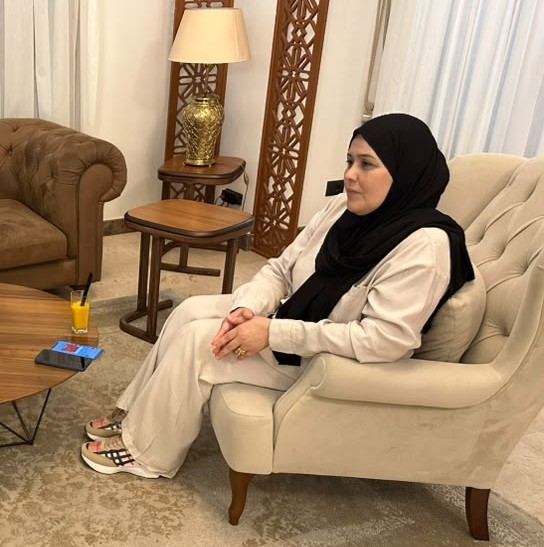
Rawassei Abd Al Jalil, journalist
Can Libya Build a Legal Framework That Protects Women and Families from Violence?
As Libya approaches the end of 2026, legislative efforts are moving towards the official adoption of a law protecting women from violence, alongside work on a separate draft law addressing domestic violence. In an interview with MP Intesar Shnieb, Head of the House of Representatives’ Committee on Women and Children, Rawassei Abd Al Jalil examines the latest developments in the legislative process, coordination with relevant institutions, and the committee’s vision for strengthening family protection and improving the enforcement of existing laws.
For many women and children in Libya, violence does not necessarily begin or end with a single incident. It can take place behind closed doors, within relationships where economic dependence, social pressure and gaps in legal protection make it difficult for victims to seek help or access protection.
In some cases, the consequences extend beyond physical harm, affecting family relationships, child custody arrangements and individuals’ ability to rebuild their lives following separation or abuse.
These challenges have repeatedly exposed the limitations of Libya’s existing legal framework, particularly when it comes to preventing domestic violence, protecting those affected and ensuring that legal remedies translate into meaningful protection.
Against this backdrop, the House of Representatives has been pursuing legislative initiatives aimed at addressing violence against women and strengthening family protection. At the centre of these efforts is MP Intesar Shnieb, Head of the House of Representatives’ Committee on Women and Children, whose work extends beyond drafting legislation to preparing the institutional groundwork required for its adoption and implementation.
In an interview, Shnieb confirmed that the committee has completed the draft law on protecting women from violence, with current efforts focused on securing its official adoption before the end of 2026. This process, she explained, is taking place alongside coordination with other members of the House of Representatives, the government, relevant public institutions and civil society organisations.
From Draft Legislation to Official Adoption
These developments come at a time when the absence of a comprehensive legal framework addressing violence against women and domestic violence remains one of the major challenges facing efforts to protect women and children in Libya.
The Committee on Women and Children has been working on two separate legislative tracks: one concerning a law on protecting women from violence, and another involving a distinct draft law to combat domestic violence.
The distinction is important. While the first focuses specifically on forms of violence experienced by women, the second adopts a broader approach to family protection, covering women, men, children, persons with disabilities and older people.
In April 2026, the committee held a consultation meeting involving legal experts, academics, representatives of government institutions and members of the drafting committee to discuss the proposed domestic violence legislation. Discussions focused on weaknesses in existing laws, practical obstacles to enforcement and preventive measures that could help reduce violence before it occurs.
Further developments followed in August, when Shnieb announced the establishment of specialised committees to review legislation concerning women and to work on measures aimed at protecting families from violence.
With the draft law on protecting women from violence now completed, however, an important question remains: how far has the process advanced, and has the initiative moved beyond drafting towards the procedures required for its official adoption?
Addressing the latest developments, Shnieb explains: “The draft law on protecting women from violence has been completed. We are currently working to finalise the necessary procedures for its official adoption before the end of this year. This represents an important step towards strengthening the legal protection of women in Libya.”
Yet completing the draft is only one part of the process. Securing institutional agreement and ensuring that the bodies responsible for supporting and implementing the legislation are involved are equally important.
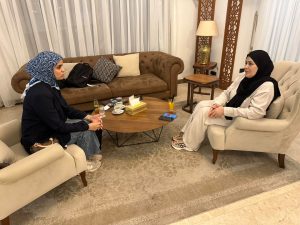
From left to right journalist Rawassei Abd Al Jalil and member of parliament Intesar Shnieb during the interview
Asked about the institutions involved in advancing the process, Shnieb says: “We are working in coordination with other members of the House of Representatives, the government, relevant government institutions and civil society organisations. The adoption and implementation of this law require joint cooperation among different stakeholders. This responsibility cannot be carried by the Committee on Women and Children alone.”
This approach reflects an understanding that legislative progress must move beyond preparing legal texts towards official adoption, followed by the institutional arrangements needed to make them effective.
However, the challenge does not end with parliamentary approval. The success of any legislation also depends on the ability of relevant institutions to translate its provisions into clear and effective procedures, ensuring that women affected by violence can access protection without administrative or social barriers.
A Law Cannot Work Without Institutions
One of the central questions surrounding any legislation addressing domestic violence is what happens after a victim reports abuse.
Legal protection requires more than defining offences and establishing penalties. It also depends on safe reporting mechanisms, access to justice, social and psychological support, and effective coordination between the institutions responsible for responding to such cases.
This makes the coordination described by Shnieb particularly significant, especially given that responding to violence requires the combined efforts of security and judicial authorities, social institutions, and organisations providing psychological support, awareness and community protection.
Is the adoption of a new law sufficient if the institutions responsible for enforcing it are not adequately equipped? And what role does institutional cooperation play in building an effective protection system?
Shnieb stresses that cooperation with different stakeholders is an essential part of the committee’s work. The objective, she explains, is not limited to securing the adoption of legislation, but also extends to improving its implementation and ensuring that the relevant institutions fulfil their responsibilities in protecting individuals and families.
This institutional approach is particularly relevant in light of discussions organised by Libya’s National Council for Civil Liberties and Human Rights in October 2026. Participants highlighted the difficulties victims face when reporting violence, including fear of social stigma, limited access to protection services and insufficient coordination between institutions.
These challenges demonstrate why legislation must be accompanied by practical systems that victims can access without fear of further discrimination or retaliation.
Family Law: Protection Begins with Effective Enforcement
For Shnieb, efforts to protect women do not end with the adoption of a dedicated law addressing violence. They also extend to the need to examine the implementation of legislation governing family relationships and strengthen its effectiveness to ensure the rights of all family members are protected.
In Libya, issues surrounding marriage, divorce, child custody, guardianship and financial maintenance can have far-reaching consequences for women and children, particularly when family relationships break down.
The experiences of divorced women, for example, often reveal how legal arrangements intersect with economic circumstances. Limited financial support, difficulties enforcing court decisions and disputes over child custody can leave women and their children exposed to further vulnerability and instability.
In June 2026, the death of ten-year-old Rawad in Benghazi brought renewed attention to the relationship between child protection, family disputes and institutional shortcomings. His case also raised questions about the mechanisms available to assess children’s safety and ensure that their best interests remain central to custody decisions.
Against this background, family law has become an important part of the committee’s wider protection agenda. But is the committee considering new amendments to existing family legislation, or is its priority to address weaknesses in the implementation of current laws?
Responding to this issue, Shnieb explains that the current direction focuses on strengthening the effectiveness of implementation, noting that specific details of proposed amendments or legislative measures have not yet been announced. “Our focus is on making the implementation of legislation more effective, in a way that guarantees the protection of the rights of all family members and ensures fairness among them. Having laws in place is not enough; what matters most is having clear mechanisms that ensure these laws are effectively implemented in practice.”
This approach is particularly important in a country where social and economic challenges often intersect with family disputes. Rights cannot be meaningful simply because they are written into legislation; mechanisms must also exist to ensure that individuals can access and enforce them.
Protecting the family should not mean preserving its structure at the expense of the safety and rights of the people within it. Rather, the family should be a safe environment built on justice, mutual respect and the dignity of all its members.
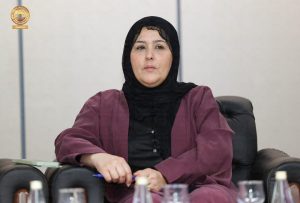
MP Intesar Shnieb in an arhive photo
The International Evidence: Violence Is Not a Private Matter
The need for stronger legal protection is not unique to Libya. International research continues to demonstrate the scale of violence against women and its consequences for individuals, families and societies.
According to the World Health Organization’s report Violence Against Women Prevalence Estimates, 2023, published in November 2025, nearly one in three women worldwide has experienced physical or sexual violence during her lifetime.
Based on population-based surveys covering 168 countries and areas, these findings underline that violence against women remains a major public health and human rights concern.
In Libya, obtaining an accurate picture of the scale of the problem remains difficult because of limited nationally representative data, underreporting and the social stigma surrounding domestic and sexual violence.
The United Nations Population Fund’s profile on gender-based violence in Libya has previously highlighted the prevalence of different forms of abuse, including physical assault, forced marriage, denial of resources and opportunities, and sexual violence.
Meanwhile, Human Rights Watch’s World Report 2026 continues to identify the absence of comprehensive domestic violence legislation and discriminatory provisions within Libya’s family and penal laws as significant concerns.
These findings point to a broader problem: legal protection cannot be effective if it addresses only certain forms of violence while leaving others unrecognised or inadequately addressed.
Violence can be physical, psychological, sexual, economic and increasingly digital. Any legal framework that fails to recognise these different experiences risks leaving significant gaps in protection.
Building a Safer Family, Not Simply Passing Another Law
Alongside legislative reform, the Committee on Women and Children has also been working on the Fortifying the Libyan Family initiative, which includes media and awareness activities involving national institutions.
The initiative reflects an understanding that legislation alone cannot change the social conditions that allow violence to continue.
Awareness programmes, educational institutions, media organisations and civil society all have a role to play in challenging the normalisation of abuse and encouraging individuals to recognise violence as a violation of rights rather than a private family disagreement.
These efforts form part of the committee’s broader vision for family protection. Building a safe family environment requires more than legislation; it also requires changes in social awareness and a stronger culture of respect for the rights and shared responsibilities of family members.
However, awareness must be accompanied by accountability. Encouraging victims to break their silence and report abuse means little if they cannot access safe reporting channels, legal assistance or protection from further violence.
Ultimately, the success of these legislative initiatives will depend on whether they establish a system in which protection is available in practice, regardless of a person’s gender, age, economic circumstances or social position.
For Libya, this is an opportunity to reconsider how laws define the state’s responsibilities towards individuals within the family, and how those responsibilities can be translated into enforceable rights.
The question is no longer simply whether Libya needs new legislation. The more important question is whether the country can build the institutions, legal guarantees and social protections necessary to make those laws meaningful in people’s lives.
Because a family cannot be considered protected when some of its members must sacrifice their safety, dignity or rights to preserve it. And a society cannot claim to uphold justice while leaving its most vulnerable members without meaningful protection.


