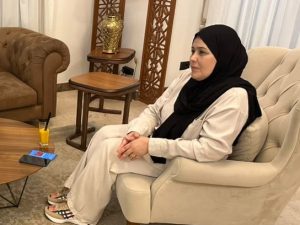
Alaa Karajah, Writer and Television Presenter
I still remember the smell of quince jam filling our kitchen during the autumn days. I used to wonder why my mother made jam from a fruit with such a sharp, tart and astringent taste. My father loved it because it reminded him of his childhood. As for me, I never realised how much I would come to miss its aroma, its ruby-red colour, and even its taste, or how these small details would become memories I would hold on to.
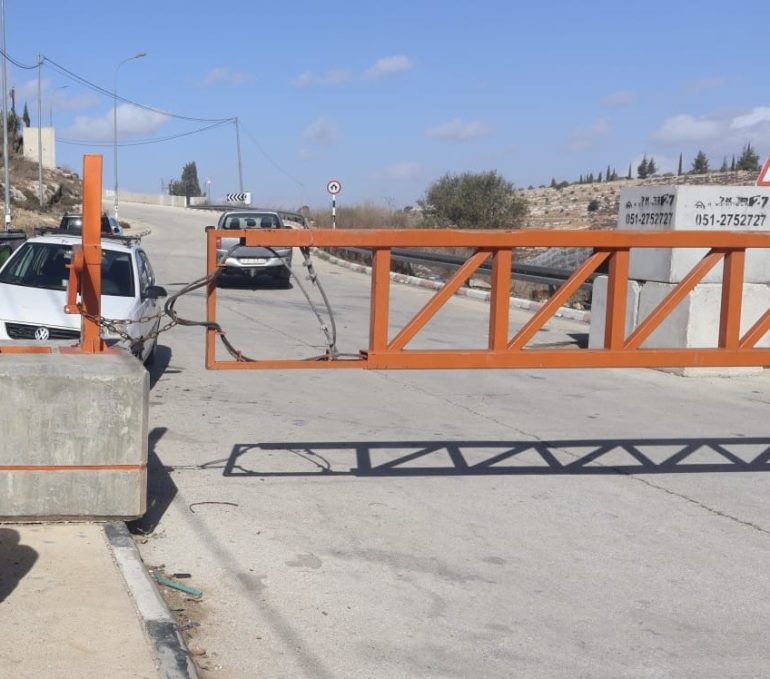
The quince that my mother turned into jam ripened on trees on land that has now become inaccessible, behind a gate closed by the Israeli army. Access is no longer permitted without its authorisation. Today, I miss the jam, and I miss the path leading to our trees, to a piece of land that was once a natural part of our everyday lives.
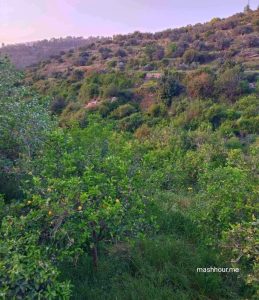
My family’s land is in the village of Deir Ibzi’, about nine kilometres from Ramallah in the occupied West Bank. My grandfather inherited the land from his father. For decades, my father and uncles planted lemon, grape, pomegranate, quince, fig, olive and loquat trees there when they were young. In the generations that followed, their children and grandchildren continued to care for the land.
Harvest seasons were an integral part of our family life. We would bring the produce home and distribute bags of fruit among relatives, friends and neighbours. The olive harvest, in particular, was an occasion we looked forward to every year. Family members and friends would gather, with women playing an essential role in picking the olives and preparing the food we shared throughout the day. Everyone contributed, and what was physically demanding work became a family gathering that brought us closer to the land and to one another.
The olive tree holds a special place in Palestinian life and history. Olive oil is a staple of Palestinian cuisine, and olives provide a source of income for many families. The harvest season in September and October is deeply embedded in Palestine’s social memory and agricultural life. This year, however, the harvest season in the West Bank has turned into a season in which Palestinians face the threat of death at the hands of Israeli settlers.
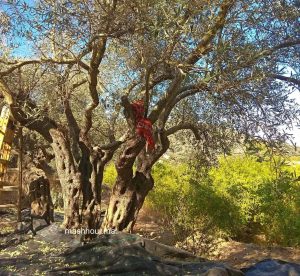
On 10 October, extremists from the Dolev settlement, built on the lands of my village, Deir Ibzi’, carried out dozens of attacks on crops and assaulted local residents, as well as international activists who had come to support them. They stole the produce belonging to my relatives and prevented landowners from accessing their property. My heart was broken when I was told how the women of my village watched their beloved olive trees attached and uprooted, with tears filling their eyes.
These attacks are not new. They go back decades, when waste and sewage were dumped onto the village’s agricultural land, damaging crops and threatening farmers’ ability to continue working their fields. Over the past few years, however, the number and severity of these attacks have increased. Their declared objective has become the forced displacement of Palestinians from their villages and towns – all the way outside Palestine. Most settlers are now armed with automatic rifles.
These attacks are part of a wider reality confronting Palestinian farmers across the West Bank, from north to south. Settlers resort to every form of violence: shooting at farmers, uprooting or burning hundreds of olive trees, destroying and setting fire to Palestinian vehicles, violently preventing landowners from reaching their fields, assaulting them, and stealing or killing livestock. The scene of violence is made even more disturbing by the fact that the Israeli army itself protects extremist settlers as they commit these crimes, rather than restraining them and preventing attacks against Palestinian civilians.
Women bear a significant share of this loss. Palestinian women work the land, and as restrictions on access to agricultural areas expand, their roles come under direct pressure. Crops that a family cannot harvest mean lost income. Work that a woman cannot reach narrows her economic options. And fear for the land extends to anxiety about her children and her family’s future.
In the village of Saffa, four kilometres from Deir Ibzi’, lives Fatima, aged 78. I have always known her as a strong and resilient woman who never gave up. After her husband’s death, she took responsibility for supporting her family. She faced cancer and survived it. She cared for her trees as though they were her own children, and she would bring olive oil and other produce from her land to our family. That land was her main source of income.
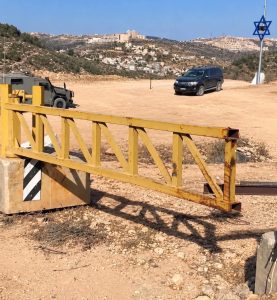
Like most residents of Saffa, Fatima has lost access to a large part of her agricultural land after the Annexation and Separation Wall swallowed up extensive areas of the village and isolated hundreds of dunums from their owners. As for the remaining land cut off by the Wall, its owners can only access it with permits issued by the Israeli occupation authorities, which, in most cases, are never granted.
In Deir Ibzi’, Saffa and other West Bank villages, attacks on land overlap with attacks on homes, property and family members. Fear becomes part of everyday life. Women find themselves shouldering multiple responsibilities: protecting their families, putting food on the table, coping with loss and trying to preserve a source of income, all while the places they have known and worked on throughout their lives are threatened, restricted and confiscated.
Last May, Israeli soldiers raided my parents’ home after breaking down the door while my parents were asleep. They terrorised and assaulted them, and used my 72-year-old father as a human shield. At my uncle’s home, they arrested his 17-year-old son, assaulted his wife and stole some of her gold jewellery. One soldier also stole money from the wallet of my 67-year-old mother. I have heard dozens of similar stories from women in my family and from friends about Israeli occupation soldiers stealing gold and valuables during raids.
This violence also extends to the arrest of women, leaving children and families to face absence and fear. My cousin Manar, 30, a mother of two, is being held on charges of incitement on social media. My cousin Izdehar’s husband has also been arrested.
I know these incidents from within my own family, and I hear similar stories from women I know. Raids are therefore not isolated incidents; they are intrusions into every aspect of women’s lives: their homes, their bodies, their children, their savings and their sense of security. With every arrest or theft, women are left with yet another burden: caring for their families and dealing with the consequences of violence, while trying to hold on to a life in which even the simplest everyday routines have become vulnerable to violation.
The stories of women in my village are part of thousands of similar stories told by women across Palestine, who work every day to protect their families while confronting increasingly difficult circumstances. In Palestinian villages bordering Israeli illegal settlements and outposts, including Nabi Saleh, Turmus Ayya, Sinjil, Iraq Burin, Al-Mughayyir and Kafr Malik, among others, simply moving from one place to another has become a daily struggle. A road blocked by checkpoints, concrete blocks and iron gates; a denied permit; a tree that can no longer be reached: all these restrictions accumulate, transforming the lives of entire families.
The figures reveal the scale of Israeli attacks on Palestinian land. According to the Wall and Settlement Resistance Commission, 482 attacks were recorded during this year’s olive harvest season, extending from the northern to the southern West Bank, with attacks concentrated in governorates where farmers and olive groves are repeatedly targeted.
At the beginning of 2026, the number of Israeli settlers in the West Bank and East Jerusalem exceeded 950,000, including more than 340,000 in East Jerusalem alone, compared with approximately 240,000 settlers in 1993, according to figures from the Applied Research Institute – Jerusalem (ARIJ). This comes amid continued illegal settlement expansion, as Israeli settlements in the occupied Palestinian territories are considered illegal under international law.
Since 7 October 2023, the West Bank has witnessed 62,916 Israeli attacks, alongside the demolition of 5,059 structures, damage to 147,111 trees, and the installation of more than 1,000 gates and barriers, according to statistics from the Palestinian Environmental Quality Authority. In the context of forced displacement, the Israeli occupation has forcibly displaced more than 50,000 Palestinians from their homes in the West Bank. These figures reflect the latest available data at the time of writing this report.
The quince jam my father loves, and the olives from my village, which my mother prepares and whose distinctive taste I can recognise among different varieties of olives, have now become painful memories, tied to land from which we have been deprived and to trees whose harvests we no longer know the fate of.
Whenever I recall our family kitchen and the scent of quince, pomegranates and lemons, I think of my mother and of the women who turned the land’s produce into food for their families. I think of the trees planted by my grandfather, father and uncles, and of Fatima, who devoted her life to her land.
What is being taken from women today goes far beyond a harvest that might be replaced in another season. It is their right to access the land, work it and provide for their families. It is also their right to preserve a relationship with the land, woven over generations by women and men who cared for it and sustained their lives through its produce.