Montse G. Sosa, Communicator
Photo: Sindicat de Llogateres
According to the United Nations Human Settlements Programme (UN-Habitat), “Housing is the foundation of stability and security for individuals and families. It is the center of our social, emotional, and sometimes economic life, and should be a sanctuary where one can live in peace, security, and dignity.”
Women’s rights to land, property, and housing are essential for truly eradicating inequalities. The lack of secure housing adds to a chain of inequalities that particularly affects working-class women. Around 35% of households primarily supported by women fall below the poverty line once housing expenses are paid.
We often hear theories about the origin of the so-called “housing crisis”: lack of land to build on; constant and increasing global urbanization; slow and impossible bureaucracy for new urban projects; lack of investment in infrastructure and services… yet the fundamental cause is overlooked: real estate rent-seeking perpetrated by so-called Vulture Funds.
Real estate rent-seeking is the practice of generating constant and increasing income through the rental or revaluation of properties (homes, land, commercial spaces) without productive work behind it. Wealth is not generated through production or services; the objective of this activity is the accumulation of wealth simply by owning land or housing: this is real estate capitalism.
This well-orchestrated activity, with state laws in its favor, has all the power to continue suffocating tenants by raising rents to impossible prices.
Globally, women have lower incomes, more precarious jobs, and greater responsibility for the care of dependents, making work-life balance difficult. This makes it impossible to absorb rent or mortgage increases, and we are expelled from our homes, neighbourhoods, and cities. After a facelift, these neighbourhoods are revalued, attracting private investment and tourist rentals for high-income individuals, forcing the displacement of their original inhabitants: gentrification.
When we are expelled from our neighbourhoods, our community ties, our support networks, our tribe are broken. This invisible network is essential for maintaining emotional well-being and our daily lives.
Female homelessness is intimately linked to patriarchal structural oppression: gender-based violence, legal discrimination, ethnic racism, and migrant exploitation.
In Spain, homeless women represent 23% (official figures), most of them concentrated in large cities. 75% of these women have experienced some type of violence throughout their lives. And 61% have been victims of some type of aggression while living on the street. Many are forced to accept unwanted sexual relations to have a place to protect themselves.
In Europe, the situation is no better; the percentage of homeless women is between 25% and 30%, of whom between 64% and 75% have suffered some type of violence while on the street.
All data, both in Spain and the rest of Europe, show a close relationship between male chauvinist violence and homeless women. These are women who flee their homes due to male chauvinist violence, and women who suffer violence while living on the street, in addition to institutional violence due to lack of protection and insufficient resources such as gender-sensitive shelters.
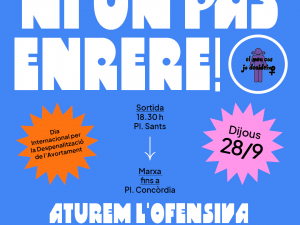
In recent years, we have seen a growing global increase in organizations fighting for dignified housing and against evictions: the Tenants’ Union of Catalonia, the Tenants’ Union of Madrid, Valencia, Malaga, and other locations in Spain, with women making up 80% of participants in their assemblies and pickets.
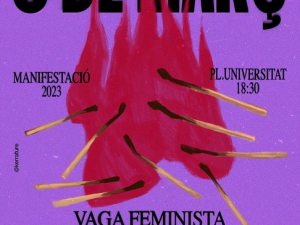
Feminism, together with community struggle, appears to be the answer and the resistance, as 80% of the people participating in housing rights assemblies are women.
The cuckoo is a bird that parasitizes the nests of other species, laying its egg in a host’s nest. When its chick hatches, it can push out the original nestlings or eat them. It has a similar underlying nature to a vulture.